How to Start Coffee Consulting: Stop Falling for the 'Homie Currency' Trap
(and Get Paid for What You Know)
If you've been in the coffee industry for a while, chances are you've already been doing coffee consulting… just without the title or the paycheck. You’ve paid your dues in the coffee industry: years as a barista, perhaps different shops, training, and managing. You’re so ingrained in the community, you have regulars you’ve gotten to know in different versions of their life: single, married, with kids. You know the local chefs and all the new spots that are about to open. People hit you up about what espresso machine to buy for home, what's the latest trend, and 'how do you feel about co-fermented coffee? And then someone shares about their new project: they’re starting a coffee shop or adding a coffee program to their restaurant, and they would love to “pick your brain,” maybe have you over to check out their coffee bar plans.
What a cool opportunity, so you say yes. They may bring up consulting, they may not. You may bring up consulting, you may not. You get deeper into it, and you talk equipment, maybe you show them a thing or two about steaming milk. And before you know it, you kind of have a second job.
Let’s be real, people who haven’t spent time working in coffee tend to think coffee is pretty simple. So asking for help likely feels low-pressure and exciting for someone new to coffee, not like asking a chef to come check out a kitchen layout in a new concept, or teaching them how to break down a whole chicken. And accepting to help is easy for you too - you love what you do. It’s exciting to have an attentive audience to talk about coffee with, plus you get to live vicariously through this experience since, at the end of the day, you’re building something, but with their money - kind of a dream scenario. So the setup works for both parties in theory. Until it doesn’t. Whether you’re realizing how much time this actually takes and you’d like to get paid, or they’d like to get more access to your time, this type of unofficial engagement can quickly turn from exciting to awkward.
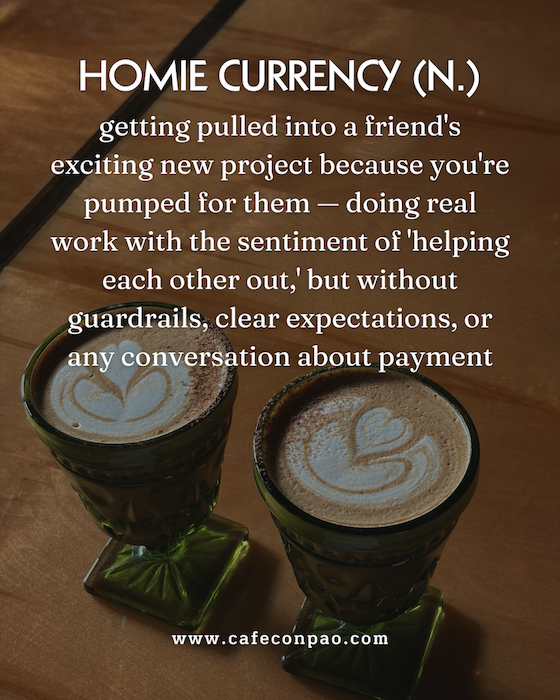
This falls under what I call the Homie Currency.
And in this scenario, it means trading expertise for nothing. And it hurts everyone involved. It cheapens the work, sets the wrong expectations for people who benefit from it, and if we're being honest, builds resentment over time. The solution: don’t treat it as a favor or a brain-picking session. This is a professional engagement.
(Spoiler: I built a free rate calculator to help you figure out what to charge. More on that below.)
But how do you treat it as such? Here are 4 practical steps:
1. Call it what it is: Consulting
I get it, we don’t all love that word. Perhaps because it’s been used and abused by people who had no business consulting because they lacked the experience necessary. Or because it seems like everyone wants to be a consultant nowadays. And my question to challenge that is: so what? Let's reframe consulting with the actual definition. And as you read it, ask yourself if that's what you'd be doing if you helped someone set up their coffee program. Ready?
Merriam-Webster describes a consultant as someone with the experience and expertise to advise individuals or organizations, often brought in to solve specific problems or offer an outside perspective that a team might be missing.
Training can be one aspect of it. But a consultant also helps to set up systems (bar flow and drink building flow), picking out equipment to optimize for quality and speed (and avoid costly mistakes), working on drink cost breakdowns and the reality of margins, as well as suggesting how to price their menu. Troubleshooting equipment, referring people from your network, such as roasters, equipment techs, tea suppliers, etc. All that is part of consulting. So own it, and charge accordingly.
2. Develop your own program
You most likely have preferences on what you enjoy teaching and working on the most. Maybe you’re passionate about bar practices, such as dialing in and milk steaming. Or perhaps you spent years working in a coffee truck, and you intimately know about how different the water system is in a mobile setup, as well as the challenges of being more exposed to the weather than a regular brick-and-mortar. Or perhaps you’ve managed a coffee shop, and you love spreadsheets, checklists, and optimizing systems like scheduling, inventory, tip payouts, etc.
The point is to start with what you love and to hone that in. Create a package that helps you offer it naturally when that conversation comes up. Have it saved as a PDF, and when someone asks to “pick your brain,” respond with something along the lines of “I’d love to chat about it. I actually do consulting and focus on [your area of expertise]. I can send you my package info if you want to take a look at it, and see if I’m the right fit for what you’re looking for.”
3. Figure out your pricing
Here we are, at the hardest part of it all. How do you put a number on your work and experience? Well, I’ve gone through this myself and have made different iterations of my rate and options, based on my personal experience in the coffee world, but also working with 1:1 clients. And the very first engagement is the hardest because you’re starting from scratch. So I made a free consulting calculator to help you get started. It’s free, and it’s meant to give you a starting point to figure out your hourly rate. More than anything, my purpose in building this is to show you how truly valuable your skills and experience are. Now, take it with a grain of salt - like I said, this is based on my experience, all of which has taken place in Tampa, FL. Where you live should be a factor in your final rate.
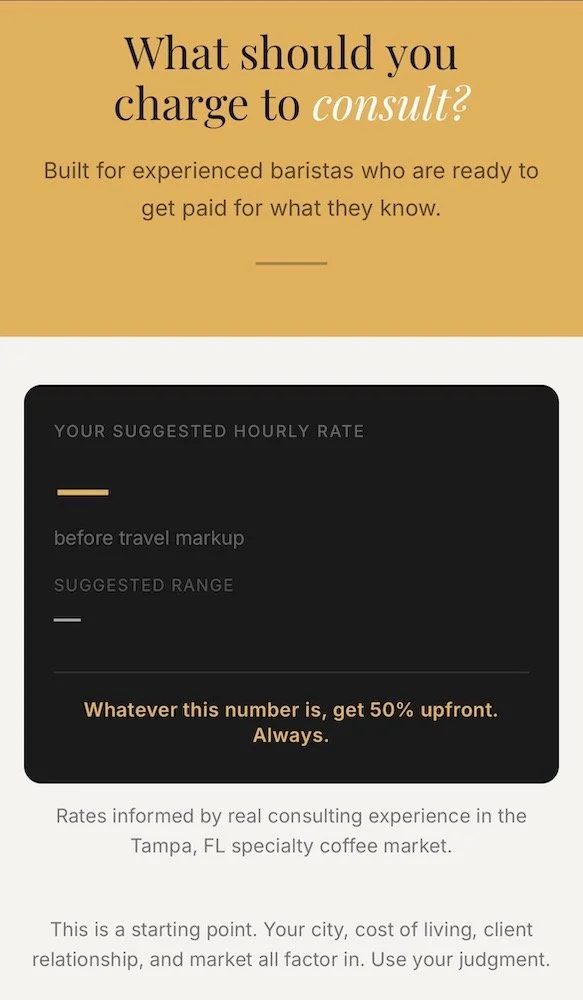
Try it: The Coffee Consulting Rate Calculator
Free, no strings attached. Plug in your experience and get a starting point for your hourly rate. Built from real numbers, not guesswork.
4. Have systems in place
If you decide to offer different packages, are open to doing full coffee program consulting, or are interested in making a custom package for potential clients, ask yourself a few questions to help you get and stay organized:
Will you do a discovery call? This is a short chat to discover what your potential client wants and what you can do for them.
What are your different package pricings? Will you require a deposit? How can they pay you?
What materials will you have for your clients to reference? Graphs, manuals, visuals?
As the world of coffee expands and contracts, and we figure out ways to continue growing in our craft, consulting could be a natural next step for experienced coffee people. It may not be your full-time job, you may do one or two and decide it’s not for you. You may love it and create a side hustle helping others start their coffee program. But by doing it, and doing it in a structured way, you help elevate the industry as a whole, bringing value to something that is often looked at as informal help. You can grow in your field, but also pave the way for others to do this. Oh, and influence decision makers at new coffee concepts to invest in high-quality coffee and honor coffee growers through the way they treat and talk about coffee.
You may not have gone to culinary school, like some chefs do, but you've put in the hours, grown your skills, and built your network. That's all valuable — and it's worth charging for. Helping new shops avoid costly mistakes is a win for everyone: they get a thriving program, and you get another great spot to grab coffee from.
Ready to get started? Try the free rate calculator to find your starting point, or check out Getting Paid for What You Know for the full system: packages, pricing, email templates, contract sample, and more.
Got questions or your own "Homie Currency" story? Drop a comment below, I'd love to hear it!
