i closed my pop-up and launched digital products. here's what the coffee shop industry can learn from it.
Recently, a friend asked me, "Why did you decide to launch the recipes?" My non-eloquent answer was somewhere along the lines of wanting to keep Una Más alive despite no longer having a brick-and-mortar or pop-ups, wanting to travel, still make a living doing what I love, and not getting a job as a barista, which I absolutely love but can no longer do thanks to my messed-up knee. A bad knee and 8-hour shifts on my feet are not a recipe I can make happen anymore. It's also what convinced me that digital products for coffee shops are more viable than most people in this industry think.
But truly, the digital world is something I've always explored, learned about, and to a small degree, pursued. When I built my coffee cart, I put together a guide on how to set up the systems for it (plumbing, electricity, etc), because it took us weeks to figure out, and I wish there was a guide I could just purchase and follow. When I spent the months interviewing and hiring people, I put together a guide on how to do those things without wanting to pull your hair out. Because again, I love learning, and I'm curious, and I wish I could see into other people's hiring processes. When I created a checklist for a staff of 35, I turned it into a Google Spreadsheet, because I figured other people could use it too: Master Coffee Shop Checklist.
These guides have been up there for years now, without me doing more than one Instagram launch announcement. So now that I have the time, I wanted to truly pursue it. And the most natural place to start was with the recipes — the thing that brought the most joy, for me and for hundreds of people who came to the Una Más pop-ups in 2024 and 2025.
And honestly, going through all of this made me realize something about the industry as a whole.
what i actually own (and what i don't)
There is very little I can control (shocker, right?!). I don't own a commercial space - so I can't control whether I can open up my own brick-and-mortar. I don't even own my Instagram audience - I can play the algorithm game but it's truly up to the meta gods. But what I do own is my intellectual property. And everything that was ever created under the Una Más brand is actually my legal possession (I have the paperwork that says so). And the best way to make something you own last is to share it with others.
Not just in a kumbaya, community-driven way (which I'm here for), but also as an actual business model. We see it with freemium models - just look at your favorite apps on your phone and how you can access some stuff for free, but the moment you want the best features, you have to pay.
It can be argued that the coffee shop industry is a little old school - in a very simplistic way that truly doesn't define what goes on behind the scenes - you set up shop, and people come to you. It's all about in-person transactions. And we've been able to use some technology to our advantage, primarily POS systems, social media, and perhaps Quickbooks for accounting. But most small coffee shops don't even have structured inventory systems. And I think we could all benefit from borrowing from other industries and integrating more tech tools into our business models - namely, digital shops and everything you need to make them happen.
Why geography is a coffee shop's biggest limitation
The main benefit: being able to expand our reach. Because a cafe is a physical location, it is limited by geography. It has a lot of benefits, sure - being a community gathering spot and everything that stems from it is crucial in neighborhoods. I fully see the value in it. But I'm talking about the business side of things: the overhead is high, and the margins are low. My argument: sell one digital offering and share it with your community. Maybe the most requested syrup, so people can make it at home. Yes, I know it's a secret, and "why would people come into your coffee shop if they can make it at home?" I want to challenge you — if that happens, then did you really have a third space?
Because the drinks are one part of the equation, but not the whole. People go to coffee shops for many other reasons: to hang out with friends, to get out of a lonely work-from-home situation, to get a break from the day, even if they don't socialize with anyone there. And yes, sometimes, just for coffee. They go for comfort, for a treat, or for habits.
I did a poll a few months ago on Instagram, and take it with a grain of salt - I don't have a big following, it's very niche.
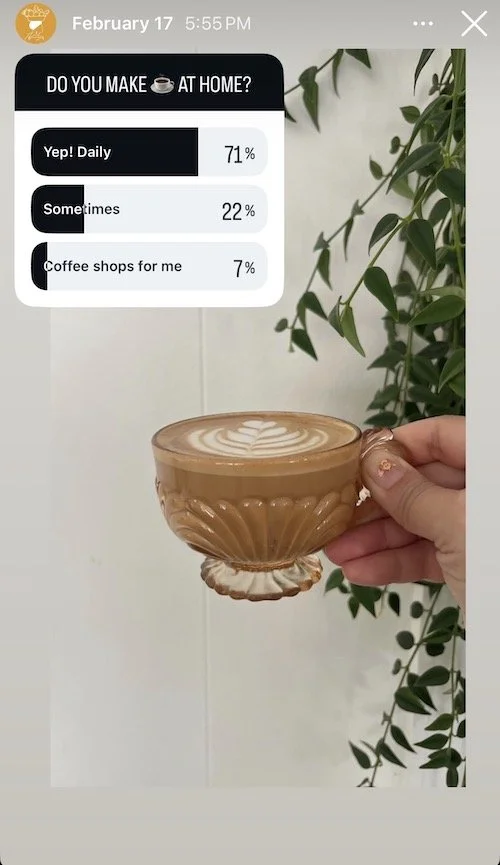
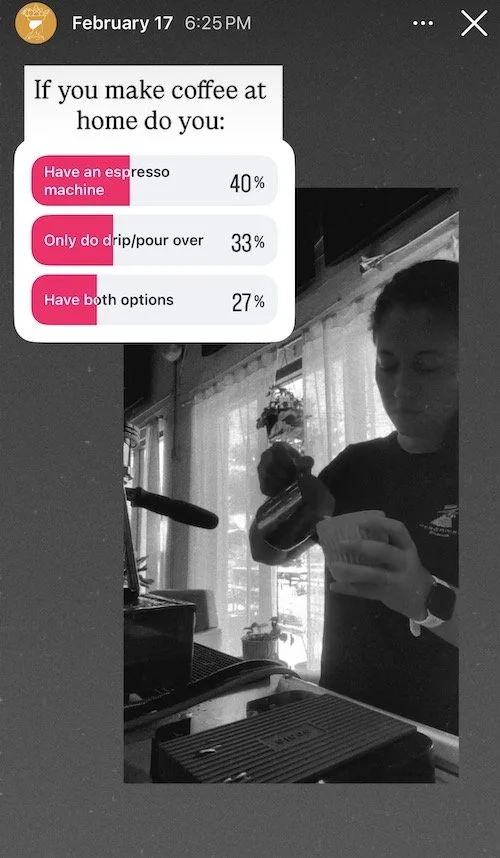
I asked people if they make coffee at home or if they go out for it. The overwhelming majority make it at home. So why not serve those who are at home? You can't set up a coffee shop in every corner (it's hard enough just to set up one), but you can sell a recipe to a good percentage of your walk-in customers and your social media followers who may follow you because they're local, or because they visited from out of town once and fell in love with it.
Why I went digital
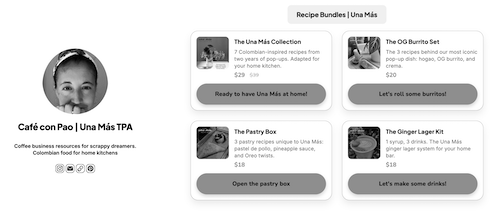
And that's why I chose to go digital. It was an idea that had been taking shape in the back of my mind, starting with wanting to do a cookbook one day, to having worked at a consulting firm for startups, and going to school for entrepreneurship. All of this shaped my mind to think outside the box, borrow from other industries, be adaptable to change, and use creativity to my advantage. And what better time to put all of this into practice than when I closed down pop-ups, returned the keys to the brick and mortar, and had to come face-to-face once again with what I was going to do work-wise.
My advice, start now. Don't wait for a pandemic, the rising costs of commercial real estate to price you out, or your margins getting smaller because of the state of the world.
Oh wait.
If you're curious about what I've been building, you can check out my store. And if you're interested in learning how to take your own coffee business digital, drop me a note — I’d love to continue building resources for coffee business owners!
